Introduction
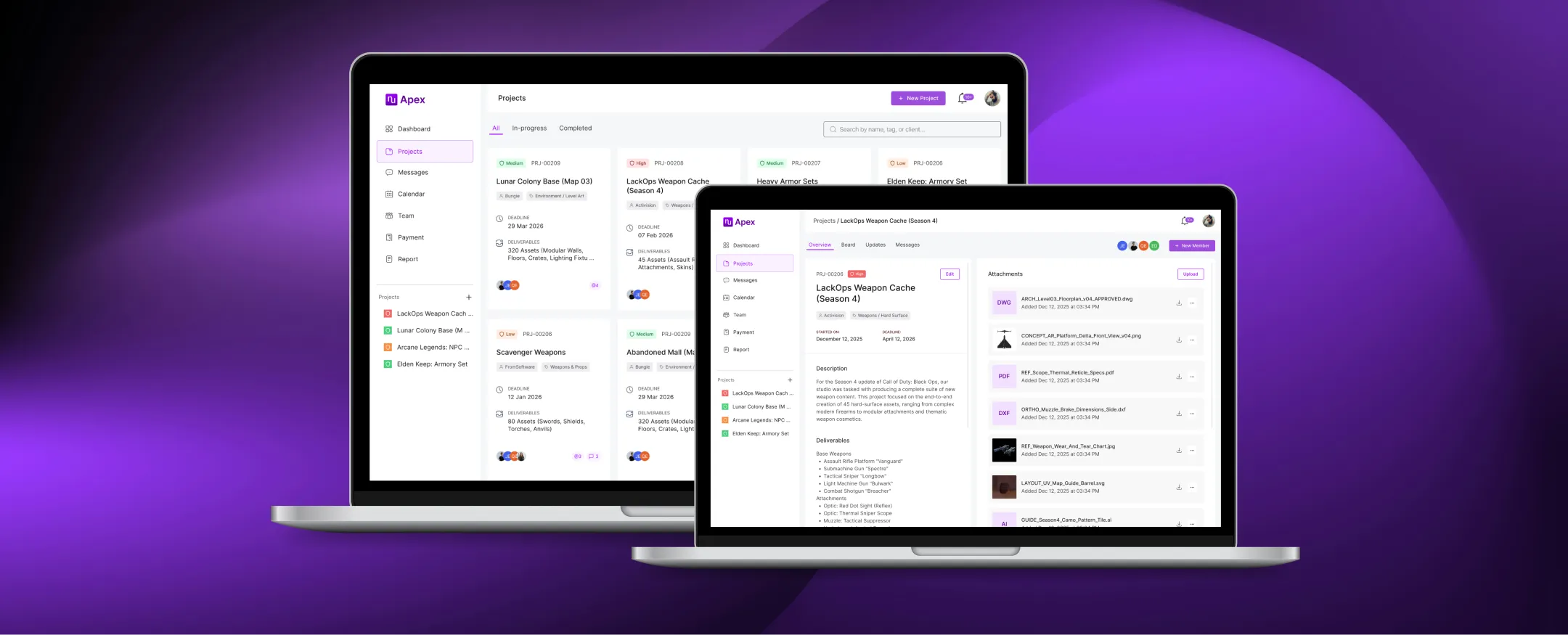
I designed a B2B Studio Management Platform for a game art outsourcing studio to improve project transparency and client communication. By replacing fragmented email and file-based workflows with a centralized portal, the platform gave clients real-time visibility into project status and streamlined approval cycles. The result was significantly reduced coordination effort for the studio and faster, clearer decision-making across projects.
Problem
My client runs a game art outsourcing studio that creates high-quality characters, weapons, and environments for games. While the creative output was strong, the studio’s internal workflow relied heavily on emails, Slack messages, and file-sharing links to manage project updates and client communication.
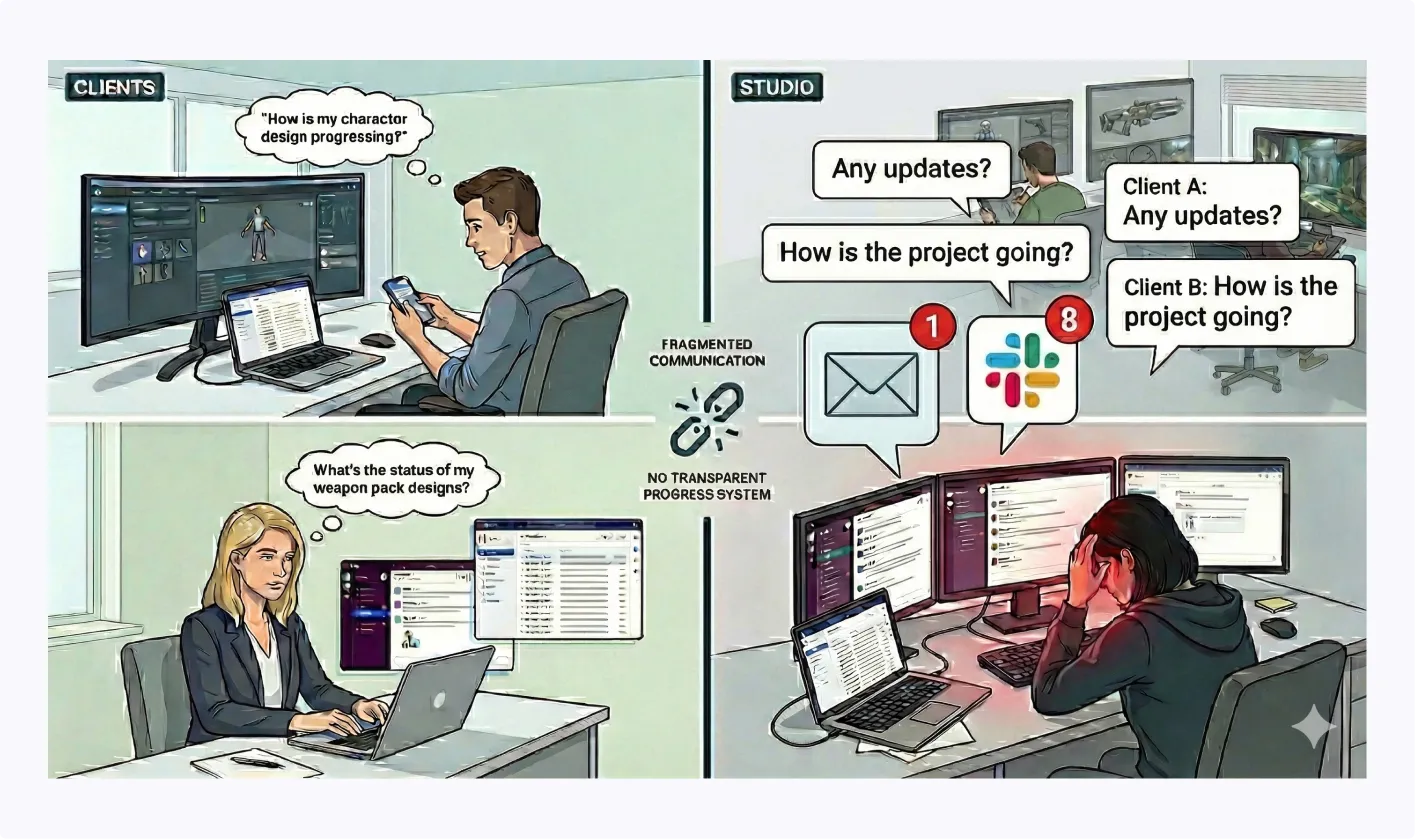
This fragmented process made it difficult to present a clear, real-time view of project progress to clients. Project managers spent significant time manually consolidating updates, feedback, and approvals across multiple tools.
User Research
Some of the challenges identified in this project were informed by my understanding of B2B workflows and best practices, while others came directly from conversations with the studio team. To validate assumptions and gather real requirements, I conducted user interviews with the studio owner and project managers who were responsible for coordinating client communication and approvals.
Through these interviews, it became clear that a significant amount of time was spent manually preparing status updates and consolidating feedback across emails, Slack messages, and file-sharing tools.
The studio wanted to proactively improve transparency and reduce coordination effort as project volume increased. These insights shaped the focus of the platform around clear project status visibility, simplified communication, and faster approvals.
My Vision
The goal was to create a system that allows project managers to communicate updates efficiently, accelerate approvals, and let the creative team focus on producing high-quality game assets.
I aimed to provide the studio with a centralized platform that makes project progress fully transparent to clients, reducing coordination fragmented across multiple tools and simplifying approval workflows.
Features
Centralized Project Management
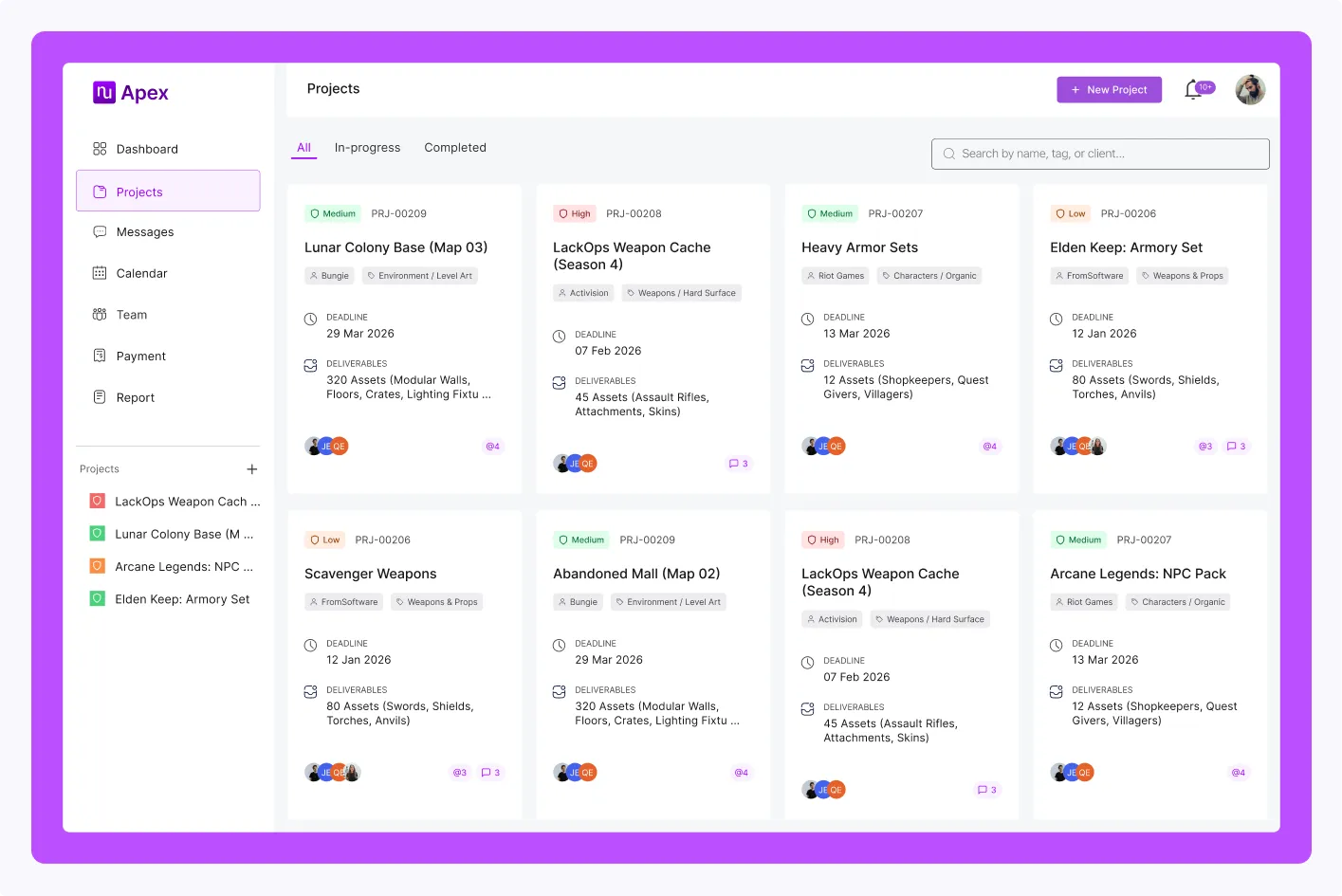
Problem: Project Manager had to jump between different tools to track projects, which made it difficult to understand progress, balance workloads, and prioritize deadlines.
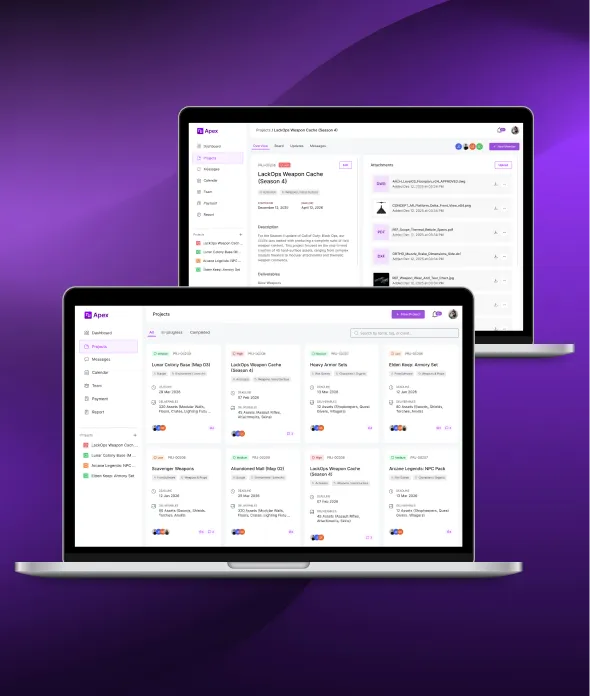
Solution: I introduced a centralized project dashboard that brings all active projects into a single view. By surfacing critical project details on each card, it enables project managers to quickly understand project priority and workload.
Clear Project Overview
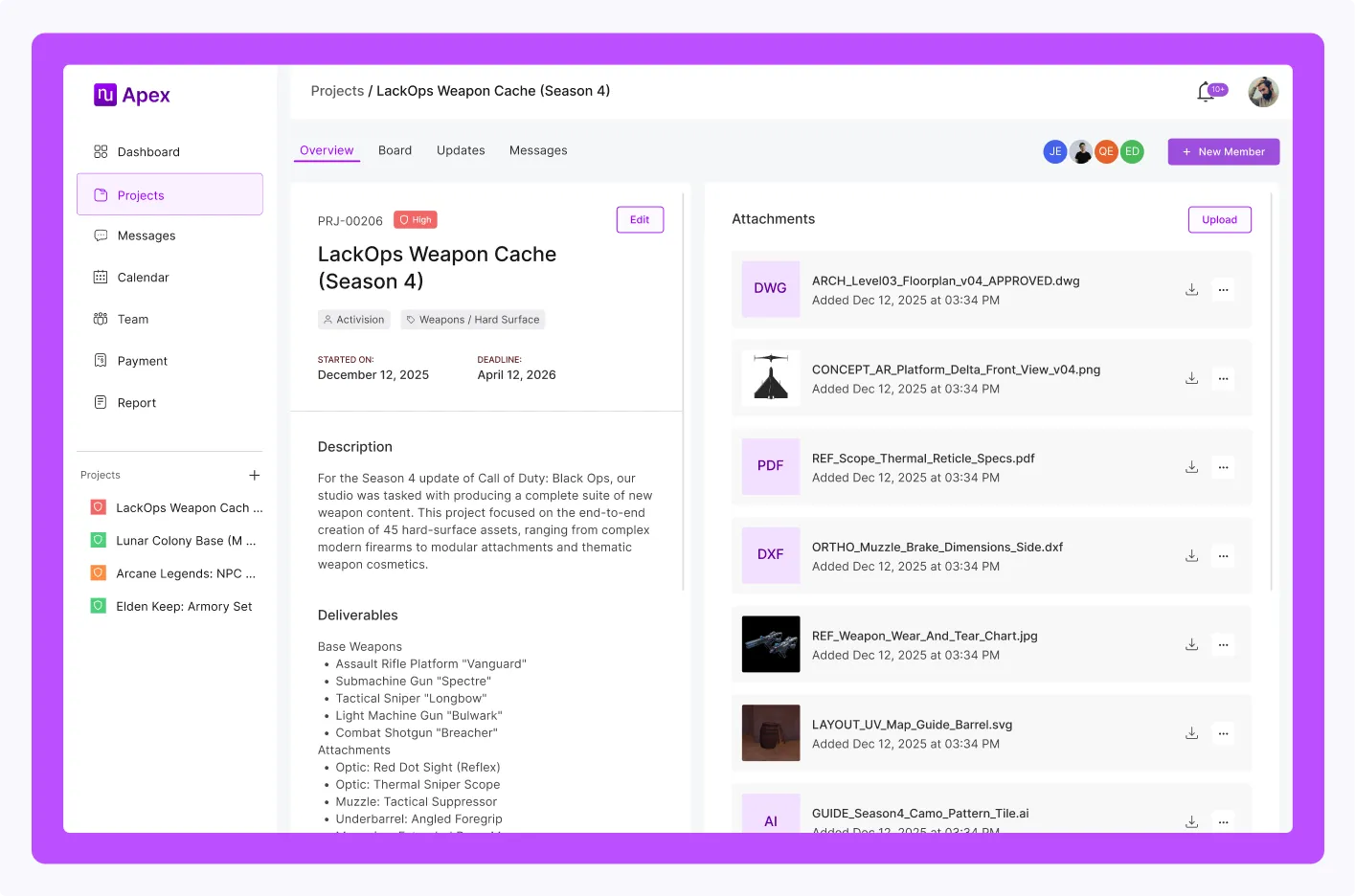
Problem: Essential project details such as technical specifications and concept art were scattered across disparate email threads and cloud storage links.
Solution: I created the project overview page, containing every critical piece of information the creative team needed to start working immediately.
Streamlined Progress Updates Pipeline
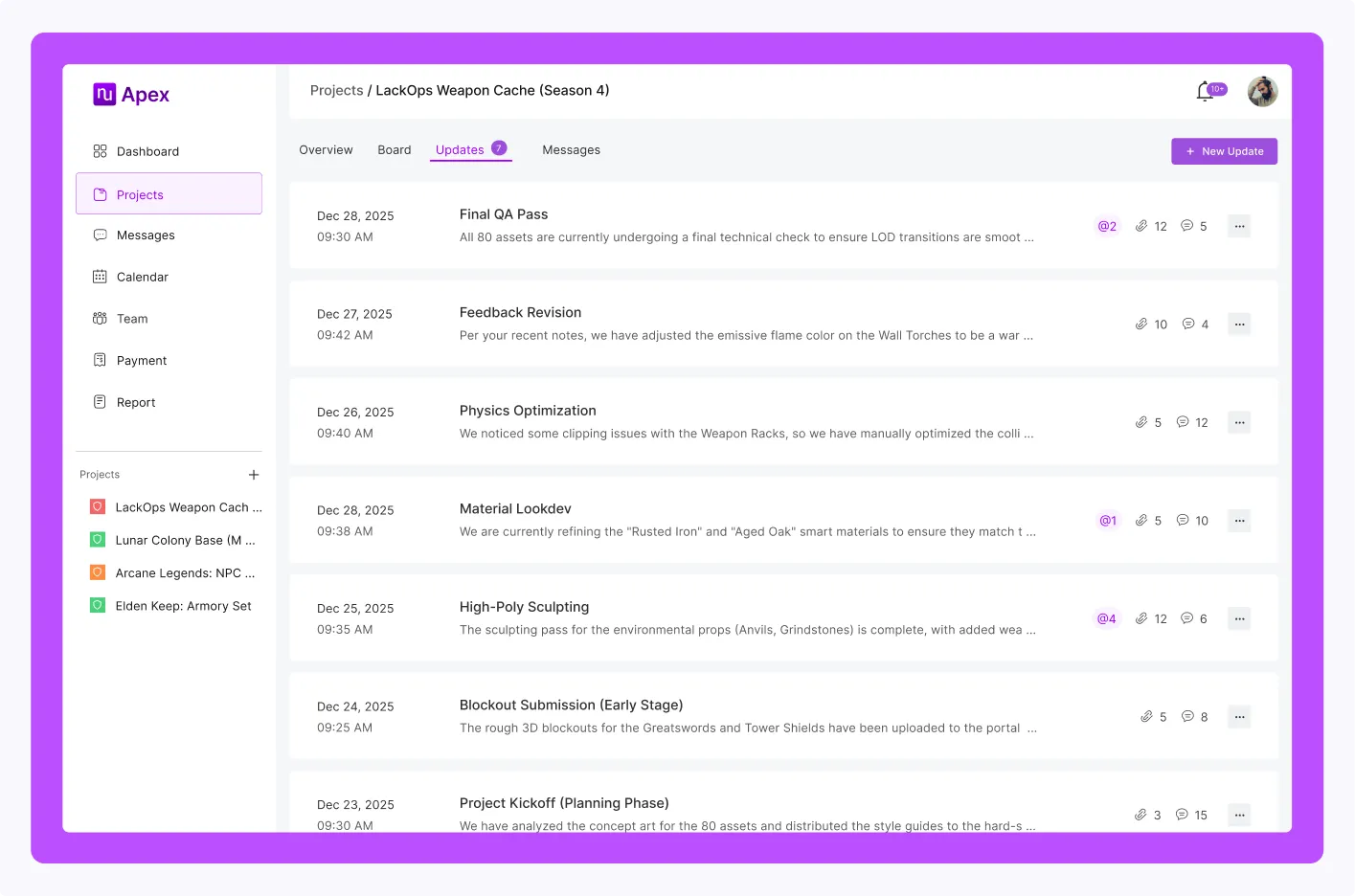
Problem: The studio’s internal workflow relied heavily on emails, Slack messages, and file-sharing links to manage project updates and client communication. This fragmented process made it difficult to present a clear, real-time view of project progress to clients.
Solution: I designed a centralized Updates Feed that streamlines the progress updates workflow for Project Managers while giving clients 24/7 visibility. Team members record their daily technical progress on a kanban board. The project manager aggregates this granular information into a single, high-level update to share with the client.
Contextual Feedback Loop
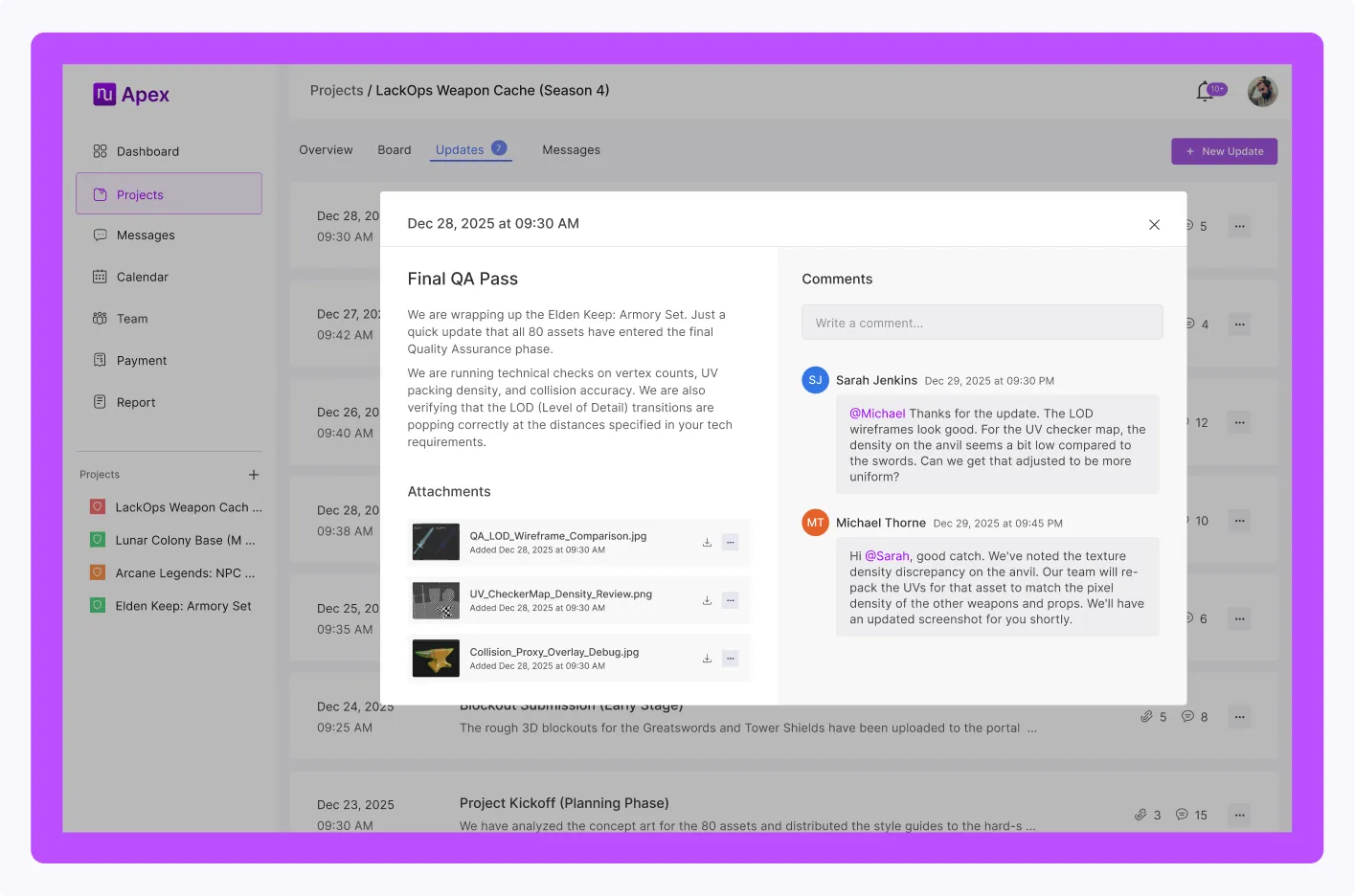
Problem: Feedback was previously scattered across Slack, and emails, making it hard to track approvals or specific change requests.
Solution: I designed a threaded comment system directly inside the update modal. A contextual feedback loop enabled the studio and its clients to give and receive feedback directly within the specific update of work, reducing coordination effort, and accelerating decision-making and approvals.
Result & Impact
I first introduced the designed solution on a limited set of active projects to validate its impact on communication and approvals before expanding usage. Early adoption showed immediate improvements in project transparency, with clients relying on the platform instead of requesting updates through email or messaging tools.
By introducing our Studio Management Platform, the platform shifted project coordination from reactive communication to proactive visibility.
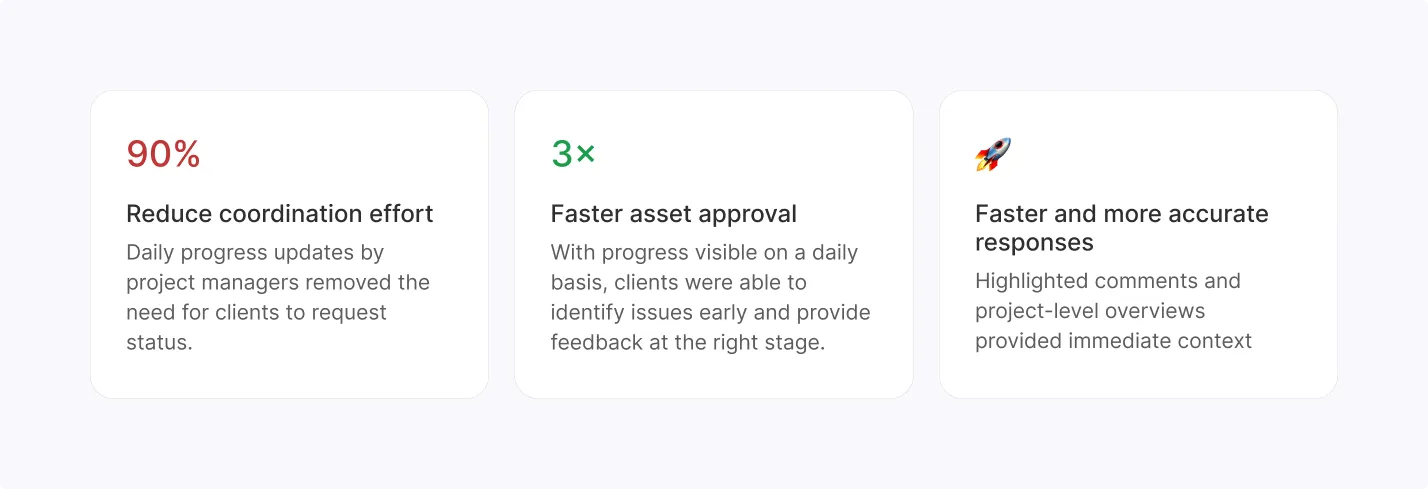
90% reduction in coordination effort
Daily progress updates by project managers removed the need for clients to request status. Questions and clarifications were handled contextually through comments tied to specific updates, significantly reducing back-and-forth communication.
3× faster asset approval cycles
With progress visible on a daily basis, clients were able to identify issues early and provide feedback at the right stage. This reduced late-stage corrections and shortened approval turnaround from multiple days to under 24 hours.
Faster and more accurate responses to client feedback
Highlighted comments and project-level overviews provided immediate context, allowing teams to respond quickly without searching across tools.
Summary
This project improved how a game art outsourcing studio communicates progress and collaborates with clients by shifting project coordination from fragmented communication to a centralized, transparent workspace. By introducing daily progress updates, contextual feedback, and clear approval states, the platform reduced coordination overhead and enabled faster, more confident decision-making across projects.
I also learned that in complex B2B workflows, clarity and structure can be more impactful than adding new features. Designing the solution around how project managers naturally work, updating progress daily, and responding to feedback in context allowed it to fit seamlessly into existing processes, rather than disrupting them.